
Drawing Tablets for Digital Art: 5 Picks for Personal Use
As an Amazon Associate, I earn from qualifying purchases. Some links may earn us a commission at no extra cost to you.
For drawing tablets, I care most about pen feel + latency (how natural it feels to draw without fighting the device). After that: screen quality (if it has one), driver stability, and ergonomics for long sessions.
Top picks
Wacom Cintiq 16 — Best “serious upgrade” pen display for desk artists
A larger, comfortable canvas when you want a screen you draw directly on. Why it wins: dependable ecosystem and a “buy once, keep for years” feel.

- IMMERSIVE CREATIVE CANVAS: 16" IPS display with 2.5K WQXGA resolution (2560 x 1600) delivers sharp, crisp, detailed visuals for digital art and design
- WACOM’S BEST PEN TECHNOLOGY: Pro Pen 3 with 8192 pressure levels responds to your lightest touch; includes tilt support, 3 shortcut keys for tool access, and a holder that mounts to either side of the display with adjustable angle for quick access
- CINEMATIC COLOR DISPLAY: 99% DCI-P3 and 100% sRGB coverage with 8-bit color depth delivers the wide color gamut used in modern displays and digital media - see your artwork as it's meant to be viewed
Pros
- Big workspace for cleaner line control
- Strong pen-and-driver reputation
- Great for long sessions at a desk
Cons
- Needs a computer (not standalone)
- Requires desk space
Trade-offs / Who should skip (failure cases)
- Skip if you draw mostly on the go (it’s a desk-first setup).
- Skip if you want a simple one-cable lifestyle (your setup may need adapters/cable management).
Scores: Performance 5/5 • Primary metric (pen feel/latency) 5/5 • Ease of Use 4/5 • Value 4/5
HUION Kamvas 13 (Gen 3) — Best value pen display for small desks
A screen tablet that’s easier to fit into tight spaces while still feeling like “real” digital drawing. Why it wins: strong feature set for the size.

- Please note: Kamvas 13 (Gen 3) Pen Display is not a standalone product, this device must be connected to a computer/laptop to work.
- All-new Canvas Glass 2.0: HUION Kamvas 13 (Gen 3) drawing tablet for pc features a fully laminated 13.3-inch screen and brand new anti-sparkle canvas glass 2.0 for reduced glare and improved accuracy. It is perfect for designers, artists, and illustrators to unleash their creativity.
- Advanced PenTech 4.0 Technology: The 16384 levels of pressure sensitivity and 2g IAF ensure a fluid and natural drawing experience, while the 3 customized pen side buttons improve your workflow.
Pros
- Compact screen size that still feels usable
- Good entry point to “draw on screen” workflow
- Portable enough to move around the house
Cons
- Needs a computer
- Setup can be cable-sensitive depending on your device ports
Trade-offs / Who should skip (failure cases)
- Skip if you hate troubleshooting cables/ports (pen displays can be pickier than basic tablets).
- Skip if you need lots of shortcut keys on-device (you might prefer a larger model).
Scores: Performance 4/5 • Primary metric (pen feel/latency) 4/5 • Ease of Use 3.5/5 • Value 4.5/5
XP-PEN Artist 15.6 Pro V2 — Best bigger-budget alternative to premium displays
A larger drawing-on-screen experience without jumping to the most expensive tier. Why it wins: more screen space for brushwork, animation, and layered illustrations.
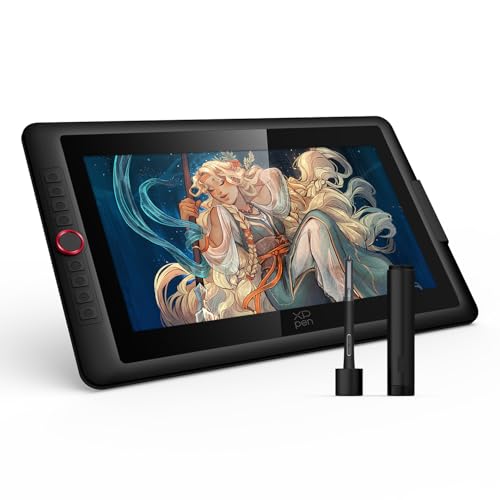
- PLEASE NOTE: The XPPen Artist 15.6 Pro V2 needs to connect with a computer to use. You need to use it with your Computer or Laptop. The 3 in 1 cable is included
- 16K Pressure Sensitive: XPPen Artist 15.6 Pro V2 drawing tablet introducing X3 Pro smart chip stylus, which has 16384 pressure levels, 100%* higher than that of its peers. It delivers much more precise and smoother lines than ever before, excelling at hyper-nuanced creation, a game-changer in details
- Easy Control, One Red Dial for All: The innovative Red Dial interface is designed for a smooth workflow and optimal efficiency, allowing illustrators or designers to master essential controls such as brush size, navigation, and zoom In/Out. It fits comfortably in your hand and ensures a natural hand position, reducing wrist strain during prolonged use
Pros
- Larger canvas helps with detail work
- Great for multi-panel layouts and timelines
- Often a sweet spot between “small display” and “huge display”
Cons
- Needs a computer
- Bigger display means less travel-friendly
Trade-offs / Who should skip (failure cases)
- Skip if you draw in coffee shops/classes a lot (size adds friction).
- Skip if you’re sensitive to desk clutter (bigger screen = bigger footprint).
Scores: Performance 4.5/5 • Primary metric (pen feel/latency) 4/5 • Ease of Use 4/5 • Value 4/5
Wacom Intuos Medium (Bluetooth) — Best non-screen tablet for learning fundamentals
A classic “draw on the tablet, look at the monitor” setup that’s affordable and reliable. Why it wins: a straightforward way to build skill without paying for a display.
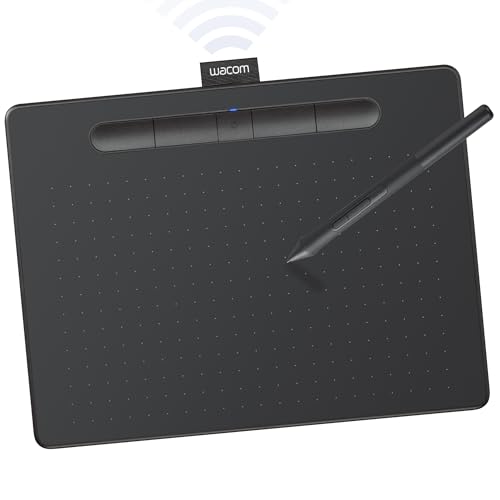
- Wacom Intuos Medium Bluetooth Graphics Drawing Tablet: Enjoy industry leading tablet performance in superior control and precision with Wacom's EMR battery free technology that feels like pen on paper
- Works With All Software: Wacom Intuos tablet can be used in any software program to explore new facets of digital creativity; draw, paint, edit photos/videos, create designs, and mark up documents
- Wireless Superior Connectivity: Connect wirelessly via Bluetooth or directly using USB-A cable which enables you to work, draw or create whether it's at a desk, on the sofa, in classrom or even outside

Pros
- Simple, durable, low-fuss option
- Great for beginners (and for photo/graphics work)
- Easier to pack than a pen display
Cons
- Hand-eye coordination learning curve (tablet vs screen)
- Smaller active area than large pro tablets
Trade-offs / Who should skip (failure cases)
- Skip if you already know you hate the “look up while drawing” workflow.
- Skip if you want a true paper-like feel without extra accessories.
Scores: Performance 4/5 • Primary metric (pen feel/latency) 4/5 • Ease of Use 4/5 • Value 4.5/5
Apple iPad (10th Generation) — Best standalone “draw anywhere” tablet
If you want to sketch on the couch, in class, or while traveling—this is the easiest grab-and-go option. Why it wins: it’s a full tablet first, drawing device second.
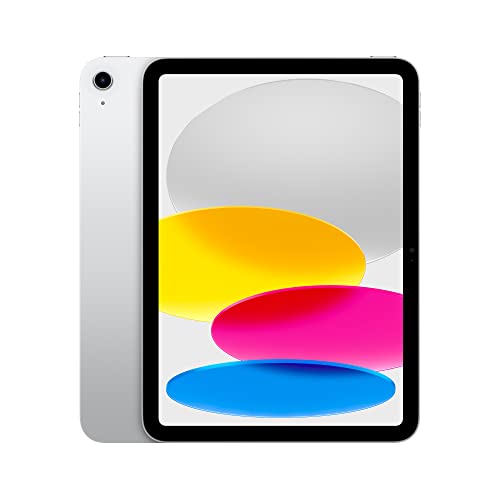
- WHY IPAD — Colorfully reimagined and more versatile than ever, iPad is great for the things you do every day. With an all-screen design, 10.9-inch Liquid Retina display, powerful A14 Bionic chip, superfast Wi-Fi, and four gorgeous colors, iPad delivers a powerful way to create, stay connected, and get things done.
- IPADOS + APPS — iPadOS makes iPad more productive, intuitive, and versatile. With iPadOS, run multiple apps at once, use Apple Pencil to write in any text field with Scribble, and edit and share photos. iPad comes with essential apps like Safari, Messages, and Keynote, with over a million more apps available on the App Store.
- FAST WI-FI CONNECTIVITY — Wi-Fi 6 gives you fast access to your files, uploads, and downloads, and lets you seamlessly stream your favorite shows.
Pros
- Standalone (no computer required)
- Great for portable sketching and note-taking
- Doubles as an everyday media/school tablet
Cons
- Stylus is typically separate
- App/storage choices matter more than on PC tablets
Trade-offs / Who should skip (failure cases)
- Skip if you want a full desktop app workflow (you may prefer a pen display + computer).
- Skip if you need lots of ports/storage flexibility without accessories.
Scores: Performance 4.5/5 • Primary metric (pen feel/latency) 4/5 • Ease of Use 5/5 • Value 4/5
Quick compare
- Desk artist, want “draw on screen” and long-term reliability: Wacom Cintiq 16
- Small desk + strong value: HUION Kamvas 13 (Gen 3)
- Bigger screen without going ultra-premium: XP-PEN Artist 15.6 Pro V2
- Cheapest reliable way to learn: Wacom Intuos Medium
- Portable, standalone drawing: iPad (10th Gen)
Buying guide (what to pick in 60 seconds)
Screen vs no screen
- I pick a screen tablet (Cintiq/Kamvas/Artist) if I want the most natural “draw where I’m looking” feel.
- I pick a non-screen tablet (Intuos) if I’m budget-focused or I already love drawing on a monitor.
Standalone vs needs a computer
- I pick iPad if I want true grab-and-go drawing.
- I pick pen displays if I want desktop apps and a bigger workspace.
Size rule
- 13″ is easier to fit and move.
- 15–16″ feels more comfortable for serious art sessions.
FAQs
Do I need a drawing tablet with a screen?
No—non-screen tablets can be excellent. I mainly go screen when I want the most natural hand-eye feel.
What size is easiest for beginners?
If you’re buying a screen tablet, 13″ is usually the easiest starting point. For non-screen, “medium” is a safe default.
Do these work for note-taking too?
Yes. If note-taking is a big goal, a standalone tablet (like iPad) is often the smoothest experience.
As an Amazon Associate, I earn from qualifying purchases.